
Thailand Temple Etiquette: Dress Code, Photos & Respectful Visits
How to visit Thai temples respectfully — shoulders and knees covered, shoes off, photo rules, and calm behavior around monks and sacred spaces.
Why etiquette matters here
Thai temples are working religious places, not museums. Monks live and study in many of them, local families come to make merit, and the Buddha images are treated with real respect. Visitors are welcome, and staff are used to tourists making small mistakes. Getting the basics right just makes the visit smoother, and at the bigger temples it decides whether you get through the gate at all.
The dress code
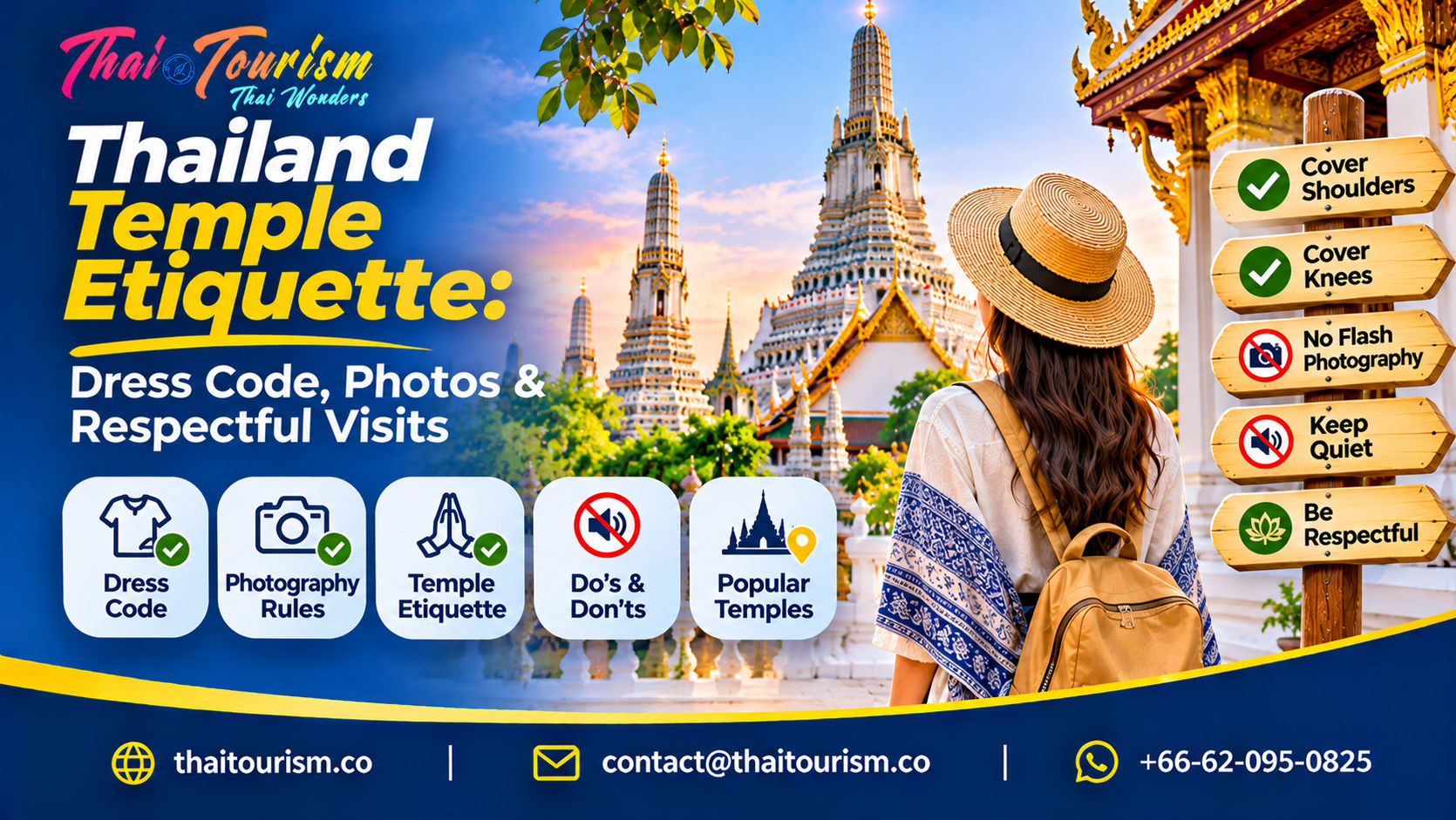
The rule is simple: cover your shoulders and knees.
What works in the heat:
- Loose, light trousers or a long skirt
- T-shirt or blouse with sleeves (not a vest or a crop top)
- A thin scarf in your bag as backup, though a scarf over bare shoulders is not always accepted at the strictest sites
- Sandals are fine at most temples, since you will take them off anyway
What usually gets turned away:
- Shorts above the knee, for men and women
- Ripped jeans with visible knees
- Sleeveless tops, spaghetti straps, low-cut tops
- See-through fabric
- Tight leggings at some sites
The Grand Palace is the strictest of the Bangkok sites. If you are booking the Grand Palace and Emerald Buddha ticket, dress properly from the hotel rather than counting on rental clothes at the entrance. Queues for those can be long, and rules on what counts as covered are applied firmly.
Shoes
Take your shoes off before entering the main hall (the ubosot or viharn) and any building with a Buddha image. You will see a pile of shoes or a rack at the door. Socks are fine to keep on. Slip-on shoes save a lot of time on a day when you visit several temples.
You do not need to remove shoes in the open courtyards.
Inside the main hall
- Step over the threshold, not on it. Thresholds are traditionally believed to house spirits
- Sit with your feet tucked behind you or to the side. Never point your feet at a Buddha image, a monk or another person. Feet are considered the lowest part of the body
- If you want to sit cross-legged, do it facing slightly away
- Keep your voice low and your phone silent
- Do not touch Buddha images, climb on statues or pose with your back turned in a way that looks disrespectful
- Some halls have no-photography signs. Respect them, even if you see others ignoring them
Monks
- Women should not touch a monk or hand anything directly to one. If you want to give something, place it on a cloth or table for the monk to pick up, or hand it to a man to pass on
- On public transport, some seats are reserved for monks. Give way
- Do not sit higher than a monk if you are in conversation
- Asking a monk for a photo is fine if you ask first and accept a no
Photos
Photography is allowed in the grounds of most temples. Inside halls, rules vary. A few things to keep in mind:
- No flash inside halls, even where photos are allowed
- Never climb on chedis, walls or statues for a better angle
- Do not use people praying as a backdrop without permission
- Tattoos or images of the Buddha on clothing can upset people. Some visitors with Buddha tattoos choose to cover them
Money and merit
Many temples have donation boxes. A small donation is welcome but not required. Some major temples charge a foreign visitor entry fee. Buying incense, flowers or gold leaf to offer is optional and done with care: follow how locals do it, or skip it.
Temples worth a visit in Bangkok
These are bookable through our site, so you can get tickets in advance and see the opening hours and inclusions on each page:
- Grand Palace and Emerald Buddha, the most important and most visited
- Wat Pho (Wat Phra Chetuphon), home of the reclining Buddha and a short walk from the palace
- Wat Arun, on the other side of the river, reached by a short ferry
- Golden Mount (Wat Saket), a climb with good views across the old city
- Marble Temple (Wat Benchamabophit), quieter and elegant
- Golden Buddha at Wat Traimit, near Chinatown
Plan the Grand Palace, Wat Pho and Wat Arun together in one morning. Start early, because heat and crowds build fast by late morning.
Outside Bangkok, the Ayutthaya river cruise day tour covers the old capital's temple ruins, and in Pattaya the Sanctuary of Truth is a striking carved wooden building. It is not a traditional temple, but the same dress standards apply. In Phuket, Big Buddha and Wat Chalong are on the Phuket city tour.
Common mistakes
- Turning up to the Grand Palace in shorts and spending half an hour in a queue for rental trousers
- Sitting with soles pointed at the main image
- Touching a child's head. In Thai culture the head is the highest part of the body
- Stepping on the threshold
- Loud group photos inside a hall during a ceremony
None of these will get you thrown out, but they are easy to avoid.
FAQ
Can I wear a long dress with bare shoulders and a shawl?
At smaller temples, usually yes. At the Grand Palace, sleeves are safer.
Are children held to the same dress code?
Generally the same idea applies, though staff are more relaxed with very young children.
Do I need a guide?
Not for etiquette. A guide helps with history and meaning. Our Bangkok city tour is an option if you want context with your visit.
Is it acceptable to visit during a ceremony?
Usually yes, quietly and from the back. Do not walk in front of people who are praying.